

Blog
Inside the Dandong Family: DD3285, DD4131 and DD3235 Explained
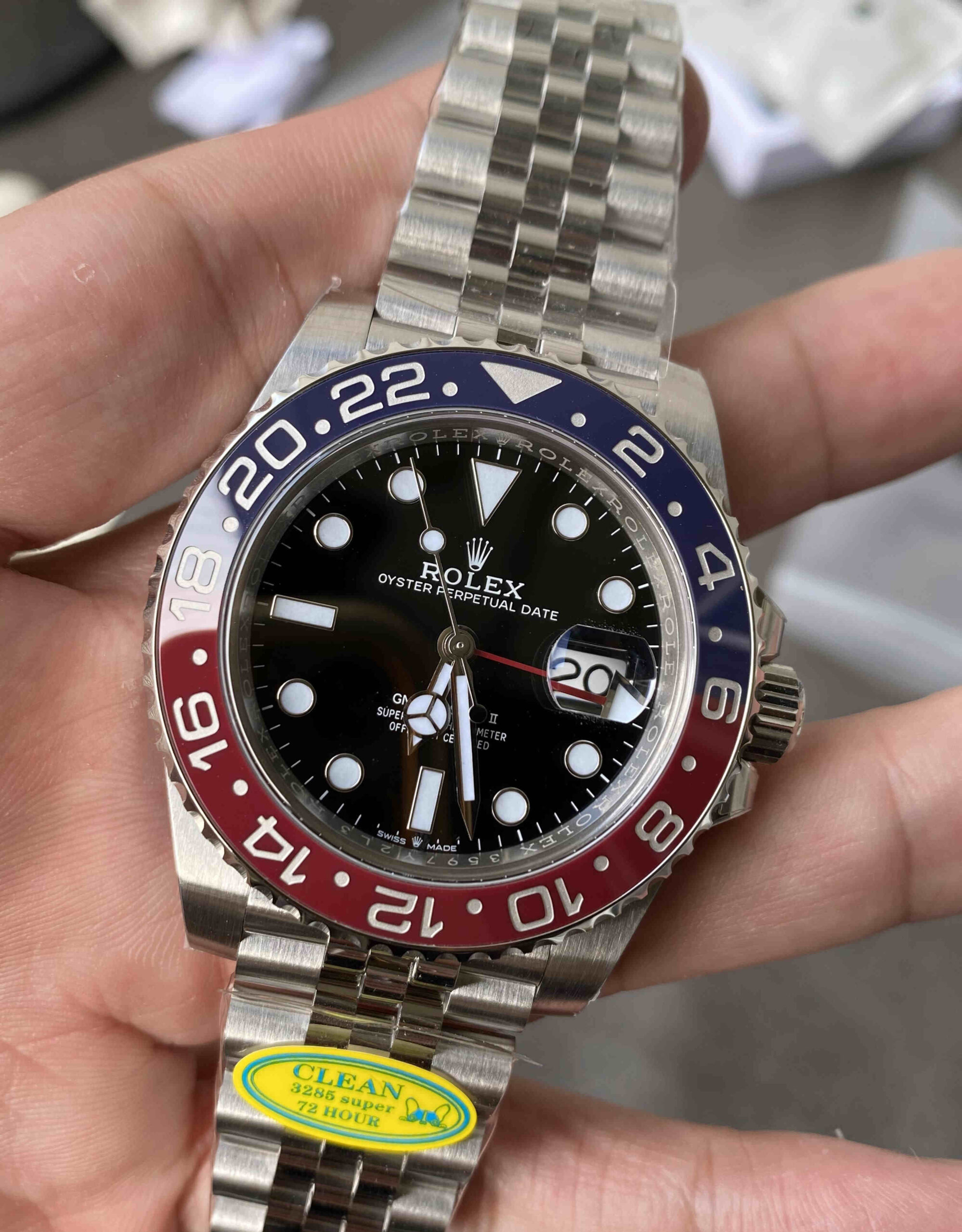
When two listings for the same reference differ by a hundred dollars, the movement is usually the reason. The calibres that matter most in this market come out of Dandong, in Liaoning province, and they are usually referred to by the prefix DD. This article explains what the DD family actually is, why an integrated movement is worth paying for, and how to tell what you are looking at.
What a Dandong calibre is
Dandong produces complete movements built to reproduce the architecture of the Swiss originals rather than to approximate their functions. That distinction is the whole point. A base movement with a decorative plate and an add-on module can look convincing from the outside, but the internal layout, the balance position and the way the complications behave are all different from the original.
An integrated calibre reproduces the original design: the same gear train layout, the same bridge shapes, often the same balance wheel position. That matters for three practical reasons.
- Function behaviour matches the original. The complication operates the way the genuine watch does, not the way a module allows.
- Parts are available and referenceable. A repairer working on a known architecture can source or make the part.
- The watch sounds and feels right. Winding, setting and the sweep of the seconds hand all read closer to the original.
The calibres you will see most
| Calibre | Reproduces | Used mainly for | Power reserve |
|---|---|---|---|
| DD3285 | Rolex 3285 | GMT-Master II, integrated 24-hour GMT | ~70 hours |
| DD4131 | Rolex 4131 | Daytona chronograph, current generation | ~72 hours |
| DD4130 | Rolex 4130 | Daytona chronograph, previous generation | ~72 hours |
| DD3235 | Rolex 3235 | Datejust, Oyster Perpetual, Submariner 41 | ~70 hours |
| DD3135 | Rolex 3135 | Submariner 40, older Datejust references | ~48 hours |
The 3235 and 3285 families share a lot of engineering: both use a modern escapement design and a longer mainspring than the calibres they replaced. The visible payoff in daily use is the power reserve. Around 48 hours means the watch stops if you leave it off for two days; around 70 hours means it is still running on the third morning.
The GMT test that settles everything
For a GMT watch, there is one test that tells you more than any documentation. Pull the crown out to the first position and turn it:
- On an integrated GMT calibre, the local hour hand jumps in one-hour steps while the minute hand and the GMT hand stay where they are, and the seconds keep running.
- On a module-based arrangement, the same action typically moves the GMT hand instead, or moves both hands together.
Try it once and you know what is inside. This is worth doing on any GMT listing, regardless of what the description claims.
What to ask about the movement before buying
- Which calibre exactly. “Swiss movement” is not an answer; ask for the specific calibre and whether it is a clone of the original architecture.
- Timegrapher reading. A rate figure on its own is nearly useless. Ask for rate, amplitude and beat error together, ideally with a photo of the instrument.
- Power reserve, measured. A seller who has actually run the watch down can tell you the real number rather than the specification.
- Winding feel. A good automatic winds smoothly with light resistance. A gritty or vague crown is a warning.
- Rotor noise. Some base movements develop a noticeable rotor rattle after a few months. A well-finished rotor bearing does not.
Service and long-term ownership
Treat a mechanical clone like any mechanical watch: it will eventually need a service, and the quality of that service depends on whether the repairer recognises the architecture. Integrated Dandong calibres are the easiest to work on because they follow a known layout, which is another reason to prefer them over an anonymous decorated movement.
Practical habits that extend the interval between services:
- Wind it fully before storing it, and store it running or let it stop rather than leaving it half-wound for months.
- Avoid setting the date between roughly 9 p.m. and 3 a.m., when the date mechanism is already engaged.
- Have the case seals checked before you swim with it, even if the rating says it is fine.
- Have it timegraphed once a year. A drifting beat error is usually the first sign of wear.
The short version
Pay for the integrated calibre when the complication matters. On a GMT-Master II the DD3285 is what makes the watch behave like a GMT rather than look like one, and on a Daytona the DD4131 or DD4130 is what makes the chronograph usable. On a three-hand Datejust or Submariner, the DD3235 buys you an extra day of reserve and a more modern escapement for a modest premium.
You can see which calibre sits in each listing across our GMT-Master II, Daytona and Datejust collections, and we publish a timegrapher reading for every watch before it ships.