
Blog
How to Read a Timegrapher Report Before You Approve QC Photos
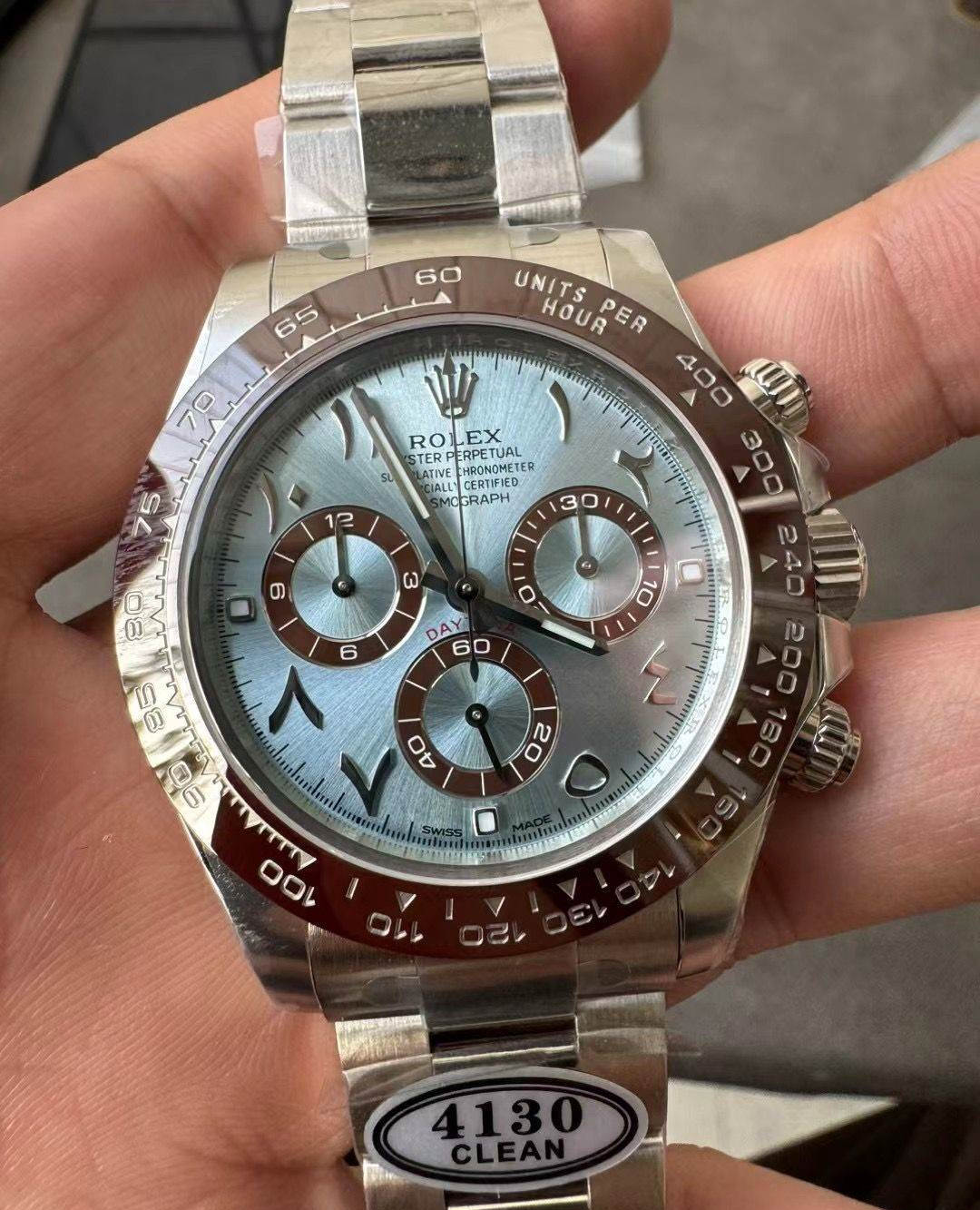
Most buyers approve QC photos by looking at the dial and the case. That is backwards. Photographs tell you whether a watch looks right; a timegrapher tells you whether it runs right, and it is the only piece of QC data that is genuinely hard to fake convincingly. Here is how to read one, and what numbers should make you ask questions.
What a timegrapher measures
A timegrapher listens to the watch through a microphone and records the sound of the escapement. From that it derives four numbers that matter:
| Reading | What it means | Healthy range |
|---|---|---|
| Rate (s/day) | How fast or slow the watch runs in 24 hours | −5 to +10 seconds |
| Amplitude (°) | How far the balance wheel swings — a proxy for power reaching the escapement | 250–310° |
| Beat error (ms) | How evenly the balance swings between its two extremes | Under 0.8 ms |
| Lift angle (°) | A setting on the machine, not a property of the watch | Must match the calibre |
Rate is the number sellers show you first because it is the easiest to understand, and it is also the least informative on its own. A watch can rate beautifully while being badly worn; a watch can rate poorly while being perfectly healthy in a position the machine is not testing.
Amplitude: the number worth reading twice
Amplitude is the one to look at after the rate. It tells you how much energy the mainspring is delivering to the escapement.
- Below about 230° the watch is underpowered. Common causes are a watch that has not been fully wound, a weak mainspring, or excess friction in the gear train. Ask for a second reading after a full wind.
- 250–310° is where a healthy automatic calibre should sit when fully wound, measured dial up.
- Above about 320° on a freshly wound watch is normal for some calibres, but persistent very high amplitude can indicate over-lubrication or a mainspring that is too strong.
An amplitude figure means nothing without knowing the wind state. A reading taken on a watch that has been sitting in a drawer for a week tells you almost nothing except that it needs winding.
Beat error: the quiet one
Beat error measures the asymmetry between the tick and the tock. Under about 0.8 ms most owners will never notice it. Above roughly 1.5 ms the watch is genuinely out of beat, and you can often hear it: the tick-tock becomes uneven, like a limp.
Beat error is also the reading most likely to drift as a watch wears, which makes it useful as a baseline. Write down the numbers from your QC report. If the beat error has doubled a year later, the movement is telling you something.
The lift angle trap
Amplitude is calculated, not measured directly, and the calculation depends on a setting called lift angle that the operator has to enter. If the machine is set to the wrong lift angle, the amplitude figure will be wrong by tens of degrees while the rate stays correct. This is the single most common way a timegrapher report misleads a buyer — not by fraud, but by a default setting nobody changed.
When you ask for a reading, ask which lift angle was used. A seller who can answer that question is a seller who actually runs the machine.
Reading the traces
Most reports include a trace line along the bottom of the display. It is worth a look:
- Two clean parallel lines — healthy.
- Lines that diverge or wander — the rate changes over time, often a lubrication or gear train issue.
- Fuzzy or thick lines — noise in the escapement, frequently a loose or dirty balance.
- A sudden step — something is catching, sometimes a hand touching or a loose part.
The multi-position question
A single reading is usually taken dial up. Watches run at different rates in different orientations, and a movement with a worn pivot will show a large spread between dial up, dial down and crown down. If you are buying a watch at the top of the market, ask for readings in at least three positions. A tight spread between positions is a better indicator of quality than an impressive rate in one.
What to ask for, in one message
- Timegrapher photo showing rate, amplitude, beat error and lift angle, with the watch fully wound.
- Readings in at least dial up and crown down.
- A note of how long the watch ran on a full wind before stopping.
- Confirmation of which calibre is fitted.
That is four lines of information, and it will tell you more about the watch you are buying than twenty photographs of the dial. Every watch we ship includes a timegrapher reading for exactly this reason — you can browse the current stock in the Rolex collection or across the full catalogue.