
Blog
Datejust 36 or 41? Choosing the Right Case Size for Your Wrist
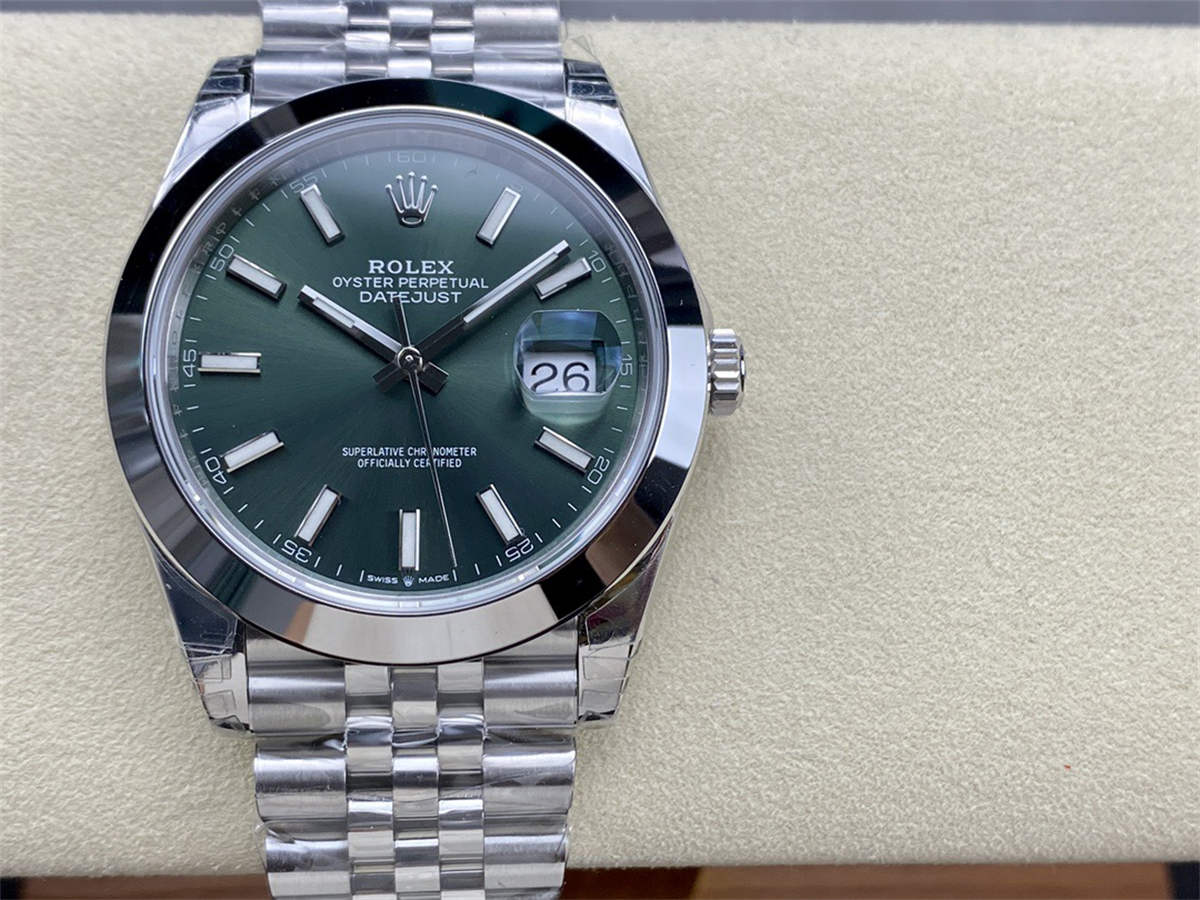
The Datejust is the watch most people mean when they say they want “a Rolex that works with everything”. It has been in production since 1945, and the modern line narrows to a single real decision: 36 mm or 41 mm. Everything else — dial, bezel, bracelet — flows from that, and getting the size wrong is the one mistake you cannot fix later with a different strap.
The two cases
| Datejust 36 | Datejust 41 | |
|---|---|---|
| Nominal case size | 36 mm | 41 mm |
| Typical references | 126200 (smooth bezel, Oyster), 126234 (fluted bezel, Jubilee) | 126300 (smooth bezel, Oyster), 126334 (fluted bezel, Jubilee) |
| Calibre | 3235 automatic | 3235 automatic |
| Power reserve | ~70 hours | ~70 hours |
| Bracelet width at lugs | 20 mm | 21 mm |
| Water resistance | 100 m | 100 m |
| Date | At 3 o’clock with cyclops | At 3 o’clock with cyclops |
Both run the same calibre, so the only mechanical difference between them is the case and bracelet. That is worth repeating: you are not choosing between two movements or two levels of finishing. You are choosing a size.
The 41 wears smaller than it sounds
If you have not handled one, the number on the label is misleading. The Datejust 41 has a relatively narrow bezel and a case that tapers toward the lugs, so it presents much closer to a 39–40 mm watch on the wrist than a typical 41 mm sports watch. Someone who normally avoids anything over 40 mm should still try the 41 before ruling it out.
The same logic works in the other direction. The Datejust 36 is not a small watch in the way a 36 mm field watch is small; the fluted bezel and the five-link Jubilee bracelet give it a visual footprint that reads larger than the case measurement suggests.
Measure your wrist properly
Wrist circumference is the useful number, and most people measure it wrong by measuring the narrow part of the wrist or letting the tape sit loose.
- Wrap a strip of paper or a soft tape measure around your wrist just behind the wrist bone, over the skin.
- Pull it snug — tight enough that it will not slide, loose enough to slip a fingertip underneath. Do not compress the skin.
- Mark the overlap and measure the length in millimetres.
- Repeat twice and take the average.
As a rough guide, assuming an average wrist shape:
| Wrist circumference | Usually comfortable with |
|---|---|
| Under 155 mm | Datejust 36 |
| 155–175 mm | Either — this is the overlap zone |
| Over 175 mm | Datejust 41 |
Wrist shape matters as much as circumference. A flat wrist carries a larger case better than a round one of the same circumference, because the lugs have somewhere to sit. If your wrist is 170 mm but very round, the 36 will usually look better.
Bezel and bracelet change the size question
The four common combinations do not wear the same:
- Fluted bezel + Jubilee — the dressiest combination, and the one that reads largest because the fluted bezel catches light at every angle and the Jubilee’s polished centre links add width visually.
- Fluted bezel + Oyster — a slightly contradictory mix: formal bezel, sporty bracelet. It works, but it is a look you either want or do not.
- Smooth bezel + Oyster — the quietest and most understated version, and the one that wears smallest. This is the combination to choose if you want the Datejust to disappear under a cuff.
- Smooth bezel + Jubilee — a middle ground with the most comfortable bracelet and the least jewellery-like bezel.
If you are buying blind, the fluted-plus-Jubilee combination is the classic Datejust and the easiest to sell on later. The smooth-bezel Oyster is the one to buy if you plan to wear it every day and do not want to think about it.
What to inspect on the example in front of you
- Cyclops and date — the date should sit centred in the window with the same margin above and below.
- Fluted bezel edges — the ridges should be evenly spaced and equally sharp all the way around, with no flattened or polished-out facets.
- Jubilee bracelet — flex the bracelet and check the links move smoothly without grit, and that the clasp closes with a firm, not vague, click.
- Dial texture — on sunburst dials, rotate the watch under a lamp and check the ray pattern runs continuously with no dull patch.
- Timegrapher reading — on a 3235 the amplitude and beat error tell you more about condition than the rate alone.
The short answer
If you own one watch and wear it with everything, the 36 in fluted bezel and Jubilee is the safer choice: it works with a shirt and it works with a t-shirt, and it flatters more wrist sizes. If you already have a dress watch and want the Datejust as an everyday piece, the 41 in smooth bezel and Oyster is the one that will not look out of place anywhere.
Both sizes are in our Datejust collection, including fluted and smooth bezel variants. If you are also considering something sportier from the same family, the Day-Date range takes the same proportions in a precious-metal direction.